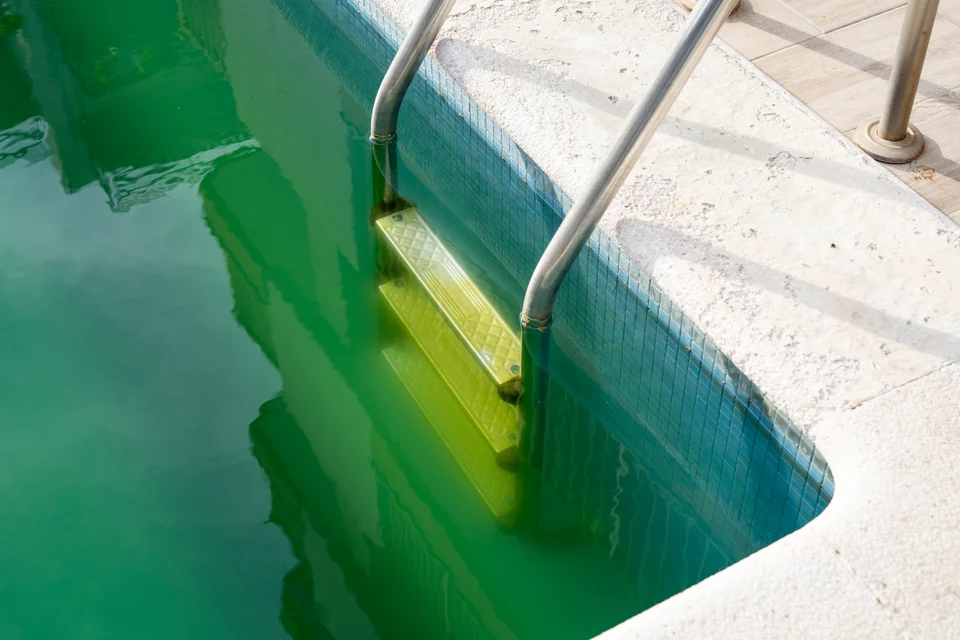
Green Pool & Algae
Treatment
Green Pool Cleanup Starts With Seeing the Pool
A green pool usually means algae has taken hold, but the right recovery plan depends on what caused it. Water chemistry, circulation, filtration, debris, equipment condition, and algae severity all affect the treatment approach.
Some green pools can be improved quickly with brushing, filtration support, and chemical treatment. Others may need filter service, multiple visits, or even draining before the pool can be safely restored.
Our Recovery Process
1. On-Site Review
We inspect the water condition, algae severity, equipment operation, filtration, and circulation before recommending the best recovery approach.
2. Brushing & Cleaning
Walls, steps, floors, and affected surfaces are brushed to loosen algae buildup so treatment can work more effectively.
3. Chemical Treatment
Treatment may include shock, algaecide, balancing adjustments, or other chemistry corrections depending on what the pool needs.
4. Circulation & Filtration
Circulation and filtration are critical during recovery. We review whether the equipment is moving and filtering water properly.
5. Clarification
Depending on the condition of the water, clarifiers, filtration support, or follow-up cleaning may be needed to help remove suspended particles.
6. Rebalance & Monitor
Once algae is under control, the water must be retested and balanced before the pool is ready for normal use.
Signs Your Pool Has Algae
Water is green, cloudy, or has visible algae
Walls, steps, or floors feel slimy or slippery
Chlorine disappears quickly after treatment
Equipment is running but the water is not clearing
Filter pressure is unusually high or flow feels weak
The pool has a strong odor or looks unsafe to swim in
Why Pools Turn Green
Low chlorine or sanitizer levels
Poor circulation or short pump run times
Dirty, clogged, or struggling filters
Hot weather and intense sun exposure
Storm debris, wind, dust, and organic material
High phosphates or heavy swimmer load
Equipment problems that prevent proper turnover
Water chemistry that has been out of balance
The Las Vegas Factor
Las Vegas heat, sunlight, wind, dust, and evaporation can make algae problems worse quickly. When sanitizer levels drop or circulation slows down, algae can spread fast — especially during warmer months.
Green pool recovery is possible, but the timeline depends on the condition of the water, equipment, filter system, and pool surface.
When a Drain May Be Needed
Not every green pool should be treated the same way. In some cases, draining may be safer, faster, or more practical than attempting a chemical recovery.
Water is too far gone for normal chemical recovery
CYA or dissolved solids are too high
The pool has heavy debris, sludge, or severe algae buildup
The filter system cannot clear the water effectively
The pool surface needs deeper cleaning or restoration
We will review the pool in person before recommending chemical recovery, filter service, draining, or any other next step.
Common Questions
How long does green pool treatment take?
The timeline depends on algae severity, water chemistry, filtration, circulation, debris load, and equipment condition. Some pools improve quickly, while others require multiple visits, filter cleaning, or additional recovery steps.
Can every green pool be cleared with chemicals?
No. Some pools can be recovered with brushing, filtration, and chemical treatment. Others may need a drain, cleanup, filter service, or deeper restoration depending on the condition.
Is it safe to swim in a green pool?
No. Green or cloudy water should not be considered safe for swimming. The water may be chemically unsafe, visibility may be poor, and algae can hide other water quality problems.
Why did my pool turn green so fast?
Las Vegas heat, sunlight, low chlorine, poor circulation, dirty filters, and wind-blown debris can all speed up algae growth. In warm weather, a pool can change quickly when chemistry or circulation is off.
Is Your Pool Green?
Tell us what is happening with your pool. We will start with a conversation and schedule a visit to inspect the water, equipment, and overall condition before recommending next steps.