Drain &
Acid Wash
Remove Stubborn Stains & Buildup
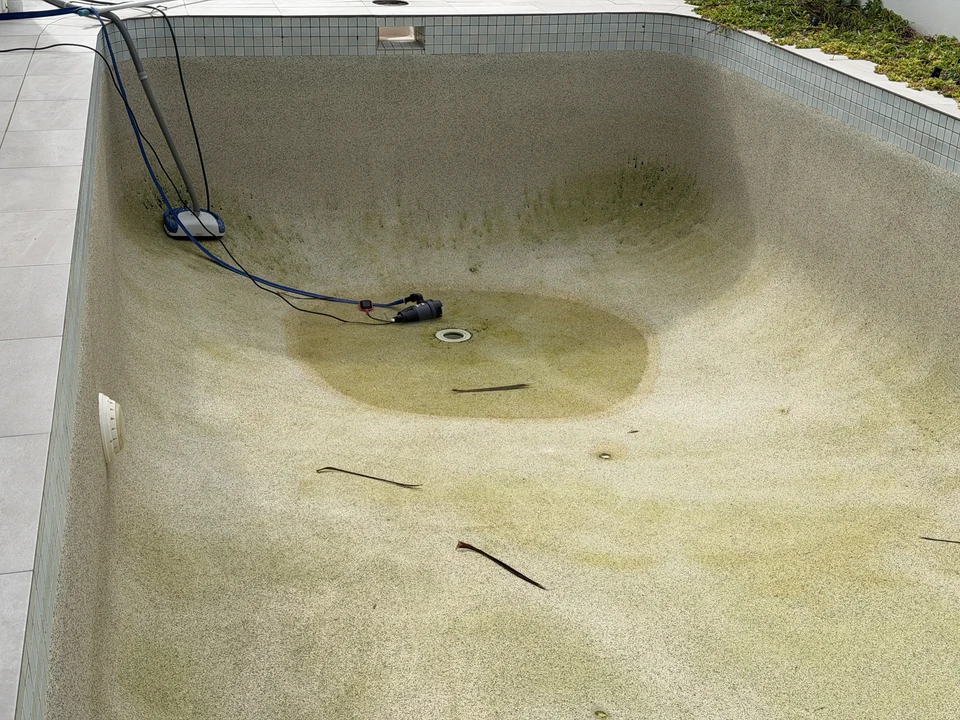
A professional drain and acid wash can remove stubborn calcium deposits, mineral staining, algae residue, and years of buildup that normal pool maintenance cannot address. It is one of the most effective ways to restore older plaster pools when the surface is still a good candidate for treatment.
Every drain and acid wash begins with an inspection. If we believe another solution would better protect your pool surface, we will explain your options before any work begins.
How We Restore Your Pool
Drain the Pool
We safely drain your pool using submersible pumps. During this stage, we inspect the shell for visible cracks, hollow spots, delamination, staining, and surface damage before treatment begins.
What this means for you
Why we drain first
Draining the pool exposes the entire surface so we can see what is actually happening. Staining, calcium buildup, algae, cracks, and worn plaster are much easier to evaluate once the water is out.
The benefits
Is It Time for an Acid Wash?
Heavy calcium or mineral buildup on tile and walls
Pool surface is stained, dull, or discolored
Stubborn algae stains remain after normal cleaning
Rust, mineral, or waterline stains are not improving
The pool has not had a deep surface restoration in several years
What Acid Washing Does Not Fix
Acid washing is a restoration treatment, not a structural repair. It can improve staining and buildup, but it cannot solve every pool surface problem.
Structural cracks or active leaks
Hollow plaster or delamination
Missing, crumbling, or severely worn plaster
Deep etching caused by long-term chemical damage
Surface problems that require resurfacing or repair
If we see signs that acid washing could shorten the life of your plaster or fail to solve the underlying issue, we will tell you before moving forward.
Common Questions
How long does a drain and acid wash take?
Most drain and acid wash services take 2–3 days depending on pool size, water drainage, surface condition, refill time, and startup chemistry.
How often should a pool be acid washed?
Many pools only need acid washing every few years, and some pools should not be acid washed at all. We recommend it only when staining, scale, or buildup justify the treatment.
Will acid washing damage my plaster?
Acid washing removes a thin layer of plaster, so it should be done carefully and only when appropriate. If your plaster is already too thin, damaged, or delaminated, another solution may be safer.
Will my pool look brand new after an acid wash?
An acid wash can dramatically improve staining, scale, and discoloration, but it cannot make damaged, worn, cracked, or aging plaster look brand new. We will set realistic expectations before work begins.
Does acid washing remove calcium?
Acid washing can help remove some calcium scale and mineral staining from plaster surfaces. Heavy waterline calcium on tile may require separate tile cleaning or media blasting.
What is the difference between acid washing and pressure washing?
Pressure washing removes loose surface dirt and algae. Acid washing chemically reacts with mineral deposits and surface staining that pressure washing alone cannot remove.
Is acid washing better than tile cleaning or bead blasting?
Not always. Acid washing is used for plaster surface staining and buildup. Tile cleaning or media blasting may be better for waterline calcium on tile. The right method depends on the surface and problem.
How soon can I swim after an acid wash?
Swimming should wait until the pool is refilled, circulation is running, and the water chemistry has been tested and balanced. Timing depends on refill speed and startup chemistry.
Wondering If Your Pool Needs an Acid Wash?
We will review your pool condition and let you know whether an acid wash is the right solution or if another restoration method would make more sense.
Acid washing removes a thin layer of plaster. It should only be performed when the surface condition makes it appropriate.